Trending Property
new

new

for-sale

for-sale

for-sale

for-sale

for-sale

new

for-sale

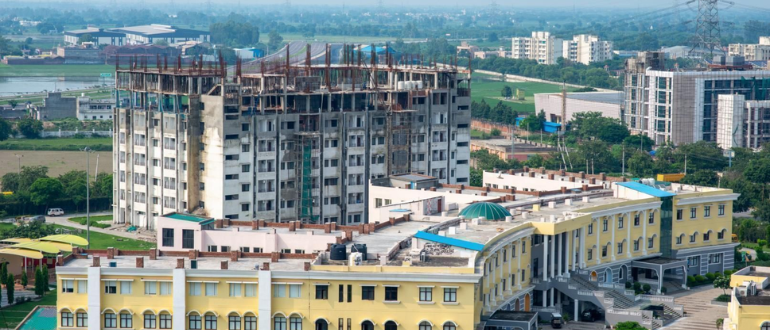
As property prices climb across Delhi, Gurugram and Noida, the next phase of residential growth in the National Capital Region is increasingly moving towards its outer edges. Sonipat in Haryana is emerging as one of the markets benefiting from this shift, combining relatively affordable housing with improving connectivity, industrial expansion and a growing education ecosystem.
The change is significant for a city that has traditionally been associated with agriculture. New infrastructure and employment centres are giving Sonipat a broader economic base, while developers are responding with residential townships, plotted developments and commercial projects.
For homebuyers priced out of established NCR markets, the appeal is straightforward: more space at a lower entry cost, without giving up access to Delhi and the wider region.
Connectivity changes the equation
Infrastructure is at the heart of Sonipat’s real estate story. The Kundli-Manesar-Palwal Expressway has strengthened the city’s links with major NCR corridors, while the Urban Extension Road-II and its Sonipat spur have improved road connectivity towards Delhi and other parts of the region.
Further transport projects could reinforce the city's position as a residential extension of the capital. The proposed Delhi-Sonipat-Panipat RRTS corridor is expected to significantly reduce travel times, while plans for the Red Line Metro extension and better connectivity towards IGI Airport could further widen Sonipat’s commuter catchment.
The strengthening of NH-44 adds another layer to the connectivity network. For real estate, these projects matter because they can alter how buyers perceive distance. A location that once appeared too far from Delhi can become considerably more attractive when travel times fall and transport options increase.
Sonipat’s planning framework is also providing room for expansion. Under the Sonipat Master Plan 2031, substantial land has been earmarked for planned development, including residential and commercial uses. This gives the city an opportunity to expand in a more structured manner as population and economic activity increase.
Industry creates the demand base
Infrastructure alone does not create a sustainable housing market. Jobs do. Sonipat is developing a stronger industrial base, with projects linked to manufacturing, logistics and the broader Delhi-Mumbai Industrial Corridor adding to its economic potential.
The Maruti Suzuki facility at Kharkhoda is among the most prominent developments in the region. Industrial parks, manufacturing units and planned economic infrastructure are expected to generate direct employment while creating demand across supporting businesses and services.
The growth of the International Horticulture Market in Ganaur is also adding an important trade component to the region's economy.
Meanwhile, investments in advanced manufacturing, including HUL’s Global Lighthouse Network factory and HVR Solar’s solar manufacturing operations, point to a shift towards higher-value industrial activity.
As employment opportunities expand, the housing market stands to benefit from a wider pool of workers and professionals looking to live closer to their workplaces while retaining access to Delhi NCR.
Education adds another layer
Sonipat’s transformation is not being driven by industry alone. The city has developed into an important education destination, with the Rajiv Gandhi Education City housing institutions such as O.P. Jindal Global University and Ashoka University, alongside medical, law and research institutions.
This ecosystem creates a steady population of students, faculty, professionals and service workers, supporting demand for both residential and rental housing.
Over time, an established education cluster can also contribute to the development of retail, healthcare, hospitality and other urban services, making the market less dependent on a single economic sector.
Plotted developments find buyers
One of the most noticeable trends in Sonipat’s residential market is the growing interest in plotted developments and gated townships. The preference reflects a broader shift among buyers seeking larger homes and open spaces. In established NCR markets, rising land prices have pushed many buyers towards high-rise apartments. Sonipat offers developers the opportunity to create larger, lower-density communities while keeping the entry price comparatively accessible.
Developers are responding to this demand with organised plotted townships rather than standalone land parcels. These projects typically combine residential plots with internal roads, landscaped areas, security, clubhouses and recreational facilities.
The format also gives buyers greater flexibility. Instead of purchasing a completed apartment with a fixed layout, plot owners can construct homes according to their requirements and timelines, subject to the project's rules and applicable regulations.
National and regional developers, including Godrej Properties, Eldeco, TDI Infrastructure and Jindal Realty, have shown interest in the wider Sonipat market, adding credibility to the city's development story.
From budget market to growth market
Sonipat’s biggest advantage remains affordability. The price gap with Delhi and Gurugram gives families an opportunity to access larger homes and plots without taking on the same financial burden associated with established premium markets.
For investors, however, affordability alone is not enough. The longer-term case depends on whether infrastructure projects are delivered, industrial investments translate into sustained employment and new residential supply is supported by adequate civic infrastructure.
That is where Sonipat's current transformation becomes important.
The city is no longer relying on a single growth trigger. Roads and mass transit are improving access; manufacturing is expanding the employment base; education is creating a stable population; and planned townships are giving the residential market a more organised character.
If these trends continue, Sonipat could move beyond its traditional image as an affordable alternative and establish itself as a distinct residential market within the NCR.
For buyers, the proposition is increasingly about more than lower prices. It is about securing space, connectivity and access to emerging economic centres before those advantages are fully reflected in property values.
That combination is turning Sonipat into one of the more closely watched affordable housing markets on the northern edge of Delhi NCR.


