Trending Property
new

new

for-sale

for-sale

for-sale

for-sale

for-sale

new

for-sale

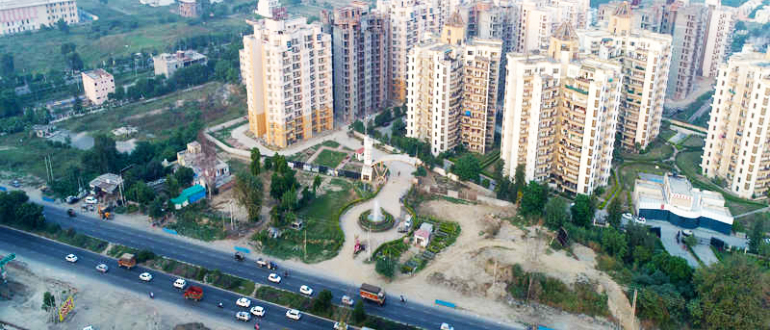
Kundli–Sonipat corridor sees rising plotted housing demand due to better connectivity, but concerns remain over infrastructure gaps and long-term urban planning challenges.
A quiet transformation is unfolding along the Kundli–Sonipat stretch of the National Capital Region, where plotted housing developments are beginning to redraw the map of urban expansion in northern NCR. What was once considered a peripheral extension is now emerging as a serious contender in the region’s real estate landscape, driven by infrastructure upgrades, investor appetite, and changing residential preferences.
The latest addition to this corridor is a plotted residential project spread across nearly 14 acres, offering just over 200 plots in a low-density format. While the numbers themselves are modest, the development reflects a broader shift in how land is being positioned and consumed in emerging urban belts. Developers are increasingly balancing density with liveability, allocating a significant portion of land to landscaped greens, parks, and community spaces.
Nearly one-sixth of the project area is dedicated to open and recreational zones. This is not merely a design choice but a response to growing awareness around environmental stress and urban heat. Urban planners point out that such configurations, if executed properly, can improve microclimates and enhance long-term habitability. However, they also caution that the success of these features depends less on intent and more on execution and maintenance.
The project is being positioned as part of an integrated township framework, with internal infrastructure such as wide roads, surveillance systems, and provisions for electric vehicle charging. The inclusion of EV-ready infrastructure and underground utilities signals an attempt to align with future urban needs. Yet, industry observers remain cautious. In emerging corridors, the gap between promised infrastructure and delivered quality has often shaped buyer sentiment and long-term value.
What strengthens the case for Kundli–Sonipat is its evolving connectivity network. The corridor sits within reach of the Kundli–Manesar–Palwal Expressway and is expected to benefit from planned metro extensions and regional rapid transit systems. These transport linkages are gradually altering commuting dynamics, allowing residents to live farther from the city core without completely disconnecting from it.
This shift is not unique to NCR, but its scale here is notable. As central zones become denser and more expensive, peripheral corridors are absorbing both spillover demand and speculative investment. The presence of educational institutions and emerging knowledge hubs in and around Sonipat has added another layer of demand, attracting students, professionals, and small investors. This has created a hybrid market where plotted developments serve both end-users and those looking for long-term appreciation.
However, the rapid pace of development brings its own set of concerns. Urban development specialists warn that plotted townships in such regions often rely heavily on marketing narratives around sustainability and modern infrastructure. The real test, they argue, lies in less visible systems such as water management, waste disposal, and long-term governance structures.
Without these, peripheral growth risks becoming fragmented and environmentally strained. Areas transitioning from rural to urban land use are particularly vulnerable, as local governance frameworks are often not equipped to handle sudden increases in population and infrastructure demand.
Another emerging trend in the corridor is the rise of gated, amenity-driven communities. Developers are responding to buyer preferences for controlled environments that promise security and curated lifestyles. While this enhances the appeal for certain segments, it also raises questions about social integration and the broader urban fabric.
Urban policymakers are increasingly examining whether such developments create isolated pockets rather than cohesive neighbourhoods. The challenge is to ensure that growth does not come at the cost of inclusivity or connectivity with surrounding communities.
With land availability tightening in core NCR markets, corridors like Kundli–Sonipat are expected to see sustained traction in the coming years. The fundamentals, from connectivity to land supply, are firmly in place. What remains uncertain is how this growth will be managed.
The next phase of NCR’s expansion will not be defined merely by how much is built, but by how well it is planned and sustained. In that sense, the Kundli–Sonipat corridor offers both an opportunity and a test case—one that could shape the future of peripheral urbanisation in India’s largest metropolitan region.


